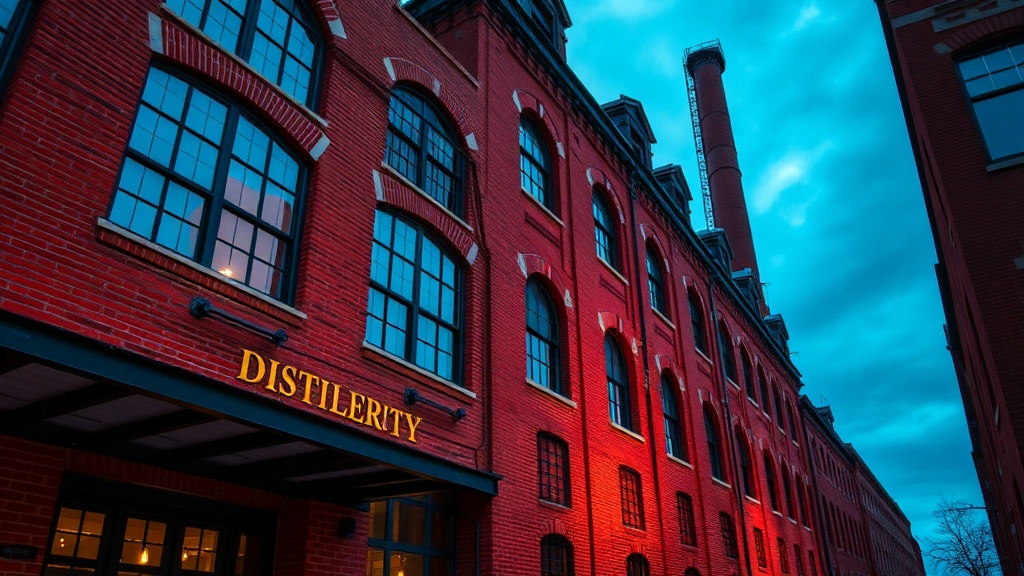
What Makes the Distillery District's Red Brick Architecture So Distinctive?

The Distillery District contains the largest collection of Victorian industrial architecture in North America—47 buildings spread across 13 acres, all built between 1859 and 1927. Yet most of us who live here walk past these heritage structures daily without considering what makes them worth preserving. Understanding the architectural DNA of our neighbourhood isn't just trivia—it shapes how we advocate for development, appreciate our surroundings, and explain to newcomers why this place feels different from anywhere else in Toronto.
Why Did Gooderham & Wicks Choose Red Brick?
When James Worts and William Gooderham founded what would become the largest distillery in the British Empire, they weren't thinking about Instagram backdrops. The red brick we see everywhere—from the Stone Distillery on Trinity Street to the Tank House Lane buildings—was a practical choice that happened to create something beautiful.
The clay deposits along the Don River provided excellent raw material, and brick offered fire resistance that timber couldn't match in an industrial setting dealing with alcohol vapours. The Gooderham & Wicks Distillery complex grew piece by piece, each addition following the same aesthetic language. That's why wandering the Distillery District today feels like stepping into a cohesive world rather than a random collection of old buildings.
Look closely at the brickwork on the Case Goods Warehouse or the Malting Building—you'll notice the slight variations in colour and texture. These aren't manufacturing inconsistencies. They're signatures of different brickyards and different decades of construction, a timeline written in masonry that spans nearly seventy years of continuous operation.
How Did the Distillery District Avoid Demolition?
By the 1990s, the Distillery District was abandoned—windows broken, roofs collapsing, the whole complex scheduled for demolition to make way for condominiums. What saved it wasn't heritage designation alone (though that helped). It was a recognition that these buildings represented something irreplaceable in Toronto's built environment.
The City of Toronto's Heritage Preservation Services played a role, but the real catalyst was a private development vision that saw value in keeping the structures intact. When Cityscape Holdings acquired the property in 2001, they committed to adaptive reuse rather than clearance. The result—pedestrian-only streets, the maintenance of loading docks and industrial details, the preservation of the Palmerston-Langford Building's distinctive silhouette—created a template that other heritage districts have since tried to replicate.
For residents, this preservation decision means we live in a neighbourhood where the physical environment tells stories. Those iron tie rods visible on building facades? They're functional elements that held walls together against the pressure of grain storage. The massive timber beams inside Archeo Trattoria and other converted spaces? Original structural components that engineers determined could still bear load after more than a century.
What Architectural Details Should Locals Look For?
Living in the Distillery District means having the chance to notice things that visitors rushing between galleries might miss. Here are specific details worth seeking out:
- The grain elevators — The tall cylindrical silos near the eastern edge of the district aren't just visual landmarks. They represent early reinforced concrete construction in Canada, built in the 1920s when the technology was still novel. The circular windows and geometric patterning were functional—equalizing pressure and allowing grain inspection—but they create an almost modernist aesthetic decades before modernism existed.
- Corbelled brick cornices — Look up at the rooflines of buildings along Trinity Street. Those stepped brick patterns aren't decorative afterthoughts; they're structural elements that helped distribute weight before steel beams became common. The craftsmanship required to lay them properly speaks to the skill of the tradespeople who built this district.
- The tank houses — These long, narrow buildings with their distinctive roof vents were designed for fermentation. The vents allowed carbon dioxide to escape during the whiskey-making process. Today, they've been converted to galleries, shops, and performance spaces—but the original openings remain, a ghost of industrial function preserved in cultural reuse.
- Cobblestone patterns — The ground beneath our feet tells stories too. The granite setts (not actually cobblestones—technically they're Belgian blocks) create drainage patterns and walking surfaces that have remained essentially unchanged since horses pulled delivery wagons through these streets.
How Does Heritage Designation Affect Our Daily Lives?
The Distillery District holds the highest level of heritage protection available in Ontario—a National Historic Site designation that covers the entire district. This isn't just a plaque on the wall. It creates real constraints on what property owners can do, and understanding those constraints helps explain some of the neighbourhood's quirks.
Want to install a new sign for your business? The Toronto Preservation Board reviews it. Planning exterior renovations? Heritage architects must approve materials and methods. Even paint colours on designated buildings require consultation to ensure they match historical palettes.
For residents, this means the Distillery District will never look like a typical Toronto neighbourhood of glass towers and chain storefronts. It also means living with some inconveniences—heating and cooling these old buildings efficiently requires creative engineering, and the narrow streets that charm pedestrians complicate deliveries and snow removal.
The Distillery Historic District management—separate from the city, a private entity that maintains public spaces here—enforces design guidelines that go beyond municipal requirements. Street furniture, lighting, even the style of bicycle racks must harmonize with the Victorian industrial aesthetic. That's why the Christmas Market decorations work so well here, and why film productions continue to choose our streets as backdrops for period pieces.
Where Can We Learn More About Our Built Environment?
For those who want to dig deeper into the Distillery District's architectural history, several resources exist. The Distillery District website maintains historical archives, and occasional walking tours (some resident-focused rather than tourist-oriented) explore topics from brick manufacturing techniques to the evolution of fire safety standards in industrial architecture.
The Archives of Ontario holds the original architectural drawings for many Distillery District buildings—blueprints that reveal how spaces were used and how they've been transformed. The Toronto Public Library's local history collections include photographs of the district during its working years, showing the same streets we walk today crowded with delivery trucks and workers rather than art buyers and café patrons.
For the architecturally curious resident, simply reading the heritage designation reports filed for each building provides fascinating detail. These documents—available through the city's planning department—explain why specific elements matter and what threats they've faced over the decades. They're written in the dry language of bureaucracy, but they contain genuine passion for preservation and deep research into construction methods that are no longer common.
We live in a neighbourhood where the buildings are characters in our daily lives—familiar, full of personality, occasionally demanding attention. The red brick that defines the Distillery District isn't just a backdrop for our community. It's the physical manifestation of our shared history, a material connection to the workers and entrepreneurs who built this corner of Toronto long before any of us arrived. Recognizing that connection—seeing the craftsmanship in the walls around us—deepens our stake in this place and our responsibility to ensure it survives for the next generation of residents.