Living in Toronto's Distillery District: What Locals Wish They'd Known

The Distillery District Isn't Just a Destination—It's Our Neighborhood
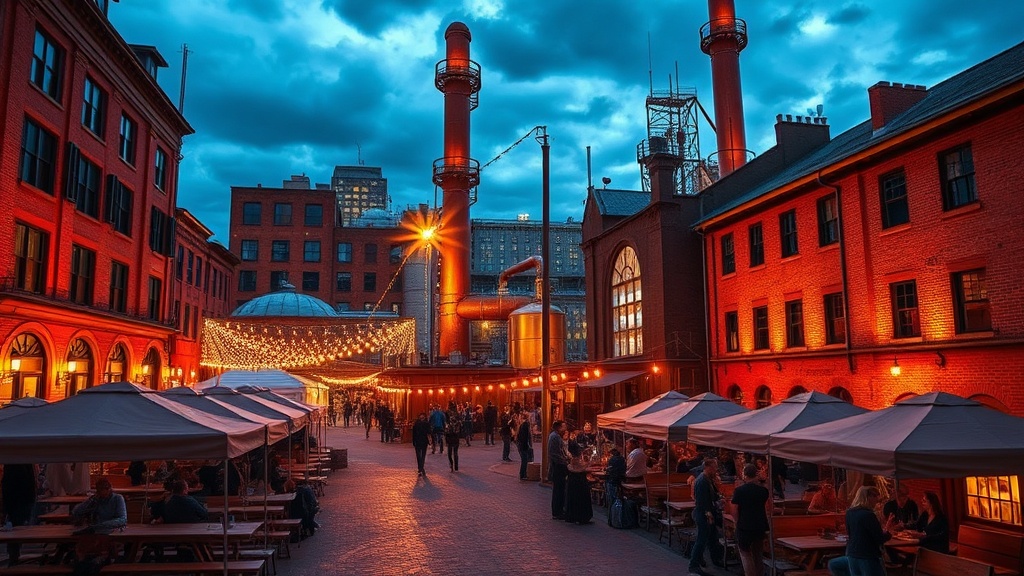
Most people assume the Distillery District exists purely for weekend visitors and seasonal festivals. They see the cobblestones, the red-brick Victorian Industrial architecture, and the galleries, then assume this place packs up and goes quiet when the tourists leave. That misconception misses entirely. We actually live here—hundreds of us, tucked into converted lofts above the boutiques and restaurants, navigating daily life in one of Toronto's most unusual residential communities. This isn't a guide for visitors planning a day trip. It's what we've learned about making a home in a place that most of our city treats as a destination.
What Should I Know About the Architecture Before Moving Here?
The Gooderham & Worts Distillery, which operated here from 1832 until 1990, left behind the largest collection of Victorian Industrial buildings in North America. When architects converted these structures for residential use, they preserved features that look spectacular in photographs but create genuine challenges for daily living. Our windows—massive openings originally designed for ventilation and natural light in factory settings—are single-pane heritage fixtures that bleed heat in winter. The brick walls, two feet thick in places, make WiFi signal propagation an adventure. We've all learned which corners of our lofts get decent reception and which require strategic router placement.
The conversion process, completed in phases starting around 2003 and continuing through the District's evolution into a mixed-use neighborhood, maintained strict heritage preservation standards. That means no exterior alterations—not even satellite dishes or visible air conditioning units. Our cooling solutions involve creative window-unit placement, portable systems, or simply accepting that August in a brick building with massive windows requires adaptability. The heating systems, upgraded during conversion, generally work well, though the high ceilings (often fourteen feet or more) mean heat rises far above where we actually live. We've learned to love ceiling fans.
The cobblestone streets that charm visitors create their own complications. Walking in heels? Risky business—veteran residents know to stick to the flatter pathways along Trinity Street or Mill Street. Grocery shopping requires planning; those bags don't roll smoothly across three-inch granite setts. Delivery drivers frequently refuse to navigate the narrow lanes, meaning we meet trucks at the perimeter and haul purchases the final hundred meters ourselves. On rainy days, the stones become genuinely slippery. We've all taken spills—it's practically a neighborhood initiation ritual.
Where Do Distillery District Residents Actually Shop and Eat?
Here's the reality that shocks newcomers: we have no full-service grocery store within the District boundaries. None. The St. Lawrence Market, located about a fifteen-minute walk west along Front Street, serves residents who prefer traditional market shopping. Most of us develop elaborate provisioning systems. The Loblaws at the base of Parliament Street—technically in the neighboring Canary District—handles weekly shopping for those willing to make the trek. Delivery services fill gaps, though drivers sometimes struggle with our address system (pro tip: always specify "Distillery District" prominently and mention the nearest intersection).
For daily necessities, we've adapted. The TTC's 121 Esplanade-River bus connects us to broader transit options, though many residents simply walk to King Street for more frequent streetcar service. The pending Waterfront East Light Rail Transit expansion promises eventual transit improvements, though construction timelines remain frustratingly vague. Meanwhile, we've embraced the pedestrian lifestyle—walking to appointments, cycling along the Martin Goodman Trail when weather permits, and accepting that our neighborhood prioritizes character over convenience.
When it comes to dining, we avoid the obvious tourist traps during peak hours. The Archeo Trattoria courtyard—gorgeous and packed with visitors by noon—actually serves as a quiet weekday breakfast spot for locals who know when to arrive. Arvo Coffee on Gristmill Lane functions as our unofficial community living room, where baristas remember regular orders and neighbors exchange updates. El Catrin's patio becomes genuinely pleasant during weekday afternoons, before the after-work crowds descend. We've learned which tasting rooms at Spirit of York Distillery maintain weeknight hours for actual conversation rather than bachelor parties.
How Does Community Life Actually Work Here?
The Distillery District Residents Association meets monthly, addressing everything from parking policy to event noise complaints to heritage preservation concerns. Our Facebook group and Nextdoor network stay active with practical information—lost pets, planned power outages, recommendations for contractors who understand heritage building quirks. During the winter months, when tourist numbers drop significantly, the neighborhood reveals its genuine community character.
We gather at the Young Centre for the Performing Arts, located at 55 Mill Street, for theatre programming that extends well beyond visitor season. Soulpepper Theatre Company and George Brown Theatre School maintain year-round schedules that locals actually attend. The Elgin and Winter Garden Theatre Centre, technically just east of our boundary, hosts community events and serves as a cultural anchor. The Archeo courtyard, while undeniably pretty, transforms during off-peak hours into a space where neighbors stop to chat and dogs greet each other on their morning walks.
The pedestrian-first design creates natural interaction points missing from typical Toronto neighborhoods. Narrow entrances, shared corridors, and the simple necessity of walking everywhere means we encounter each other regularly. When someone's struggling with furniture delivery across cobblestones, neighbors naturally help. We've developed informal systems—shared tools, recommendations for heritage-approved contractors, warnings about which buildings have particular quirks. The District's small population (roughly 400 households) means faces become familiar quickly.
What Are the Real Trade-offs of Distillery District Living?
Living here requires accepting constraints that would frustrate many people. Parking is limited and expensive—most buildings offer insufficient spaces for residents, forcing reliance on street parking or nearby lots. The heritage designation means no exterior modifications, limiting personal expression and practical solutions. Winter maintenance operates on specialized schedules to protect the cobblestones, meaning snow clearance differs from standard city streets. Moving day involves coordination with property management and creative problem-solving around loading restrictions.
Event weekends—particularly the Christmas Market and summer festivals—transform our neighborhood into something unrecognizable. Streets close, crowds surge, and simple tasks like walking the dog become strategic operations requiring timing and route planning. We've learned which alleyways connect to Parliament Street as escape routes, which courtyards offer quiet refuge, and exactly when to avoid the main plaza entirely. Some residents leave town during peak festival weekends; others embrace the energy and treat it as temporary theater outside our windows.
But the trade-offs carry genuine rewards. We wake up surrounded by architectural beauty that most people only experience on special occasions. Our morning coffee comes with views of 19th-century industrial heritage preserved as public art. The security of a managed district—private maintenance, consistent standards, heritage protection—provides stability rare in rapidly changing Toronto. We walk home through streets that genuinely qualify as beautiful, past massive tanks and machinery serving as reminders of our neighborhood's industrial past while housing contemporary life.
The Distillery District rewards local knowledge with a quality of life that transcends its obvious inconveniences. We know which benches catch afternoon sun, which doorways provide shelter during sudden rainstorms, and exactly when the morning light hits the brick façades for perfect photographs. We trade seamless convenience for character, easy parking for pedestrian intimacy, modern efficiency for historic atmosphere. This is our neighborhood—complicated, beautiful, and genuinely unlike anywhere else in our city. We wouldn't have it any other way.